 YAMAHA
 SUZUKI
 HONDA
HONDA


Motorcycle GPS Tracker: The Complete Anti-Theft Guide for 2026
A motorcycle is one of the easiest vehicles in the world to steal. Two people can lift a mid-size bike into a van in under a minute, and unlike a car, there is no heavy frame, no complex immobiliser network, and often nowhere to hide a tracking device. That is exactly why a GPS tracker has become the single most effective recovery tool a rider can fit.
How Big Is the Motorcycle Theft Problem?
According to the National Insurance Crime Bureau (NICB), more than 54,000 motorcycles were reported stolen in the United States in a single year, averaging roughly 4,500 thefts every month. Thefts follow a clear seasonal pattern, rising sharply through the warmer riding months and peaking in July. California alone accounted for close to a third of all reported motorcycle thefts.
The encouraging part: around 40% of stolen motorcycles are eventually recovered. Recovery rates rise dramatically when the owner can tell police where the bike is right now rather than simply that it is missing. That is the entire argument for fitting a tracker. You can read the NICB’s own theft-prevention guidance at nicb.org.
How a Motorcycle GPS Tracker Actually Works
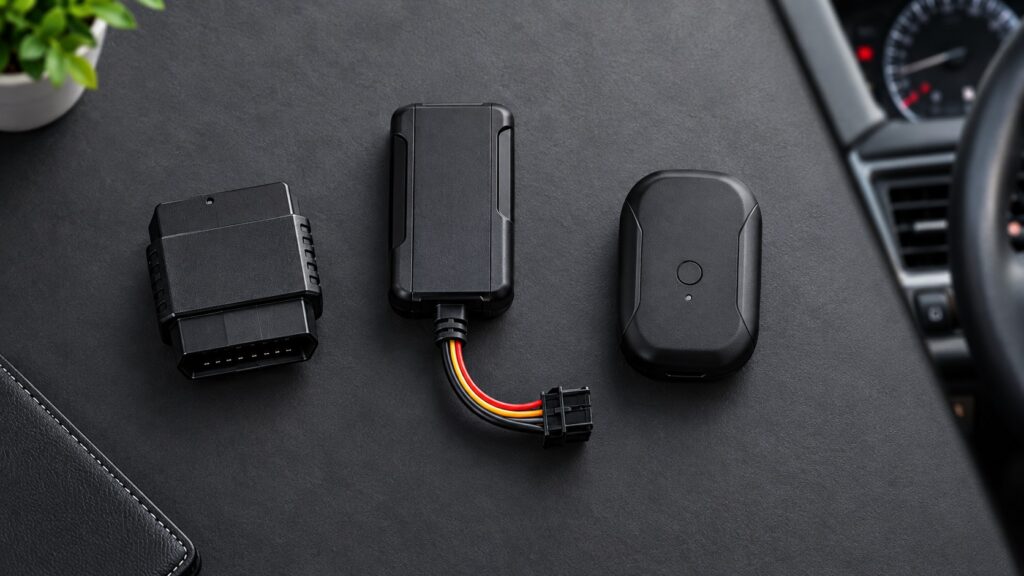
A tracker combines three things: a GPS receiver that works out the device’s position from satellites, a cellular modem that sends that position to a server, and a power source. Your phone app talks to the server, not to the tracker directly. This matters, because it explains most of the trade-offs you’ll face when choosing one.
What to Look For Before You Buy
1. Hardwired vs Battery-Powered
Hardwired trackers connect to the bike’s battery. They never need charging and can report continuously, but they require installation and a thief who disconnects the battery can cut power. The good ones include a small internal backup cell for exactly this reason — treat that backup battery as essential, not optional.
Battery-powered trackers can be hidden anywhere on the bike with no wiring, which makes them far harder to find. The trade-off is that they report less often to conserve power, and you must remember to recharge them.
The strongest setup, if budget allows, is one of each: a hardwired unit a thief may find and disable, and a hidden battery unit they don’t know exists.
2. Network Generation — Check This Carefully
Many cheap trackers still run on 2G networks, which are being switched off or already retired in a growing number of countries. A 2G tracker in a market that has shut down 2G is an expensive paperweight. Confirm the device supports 4G LTE (or at minimum a network generation your country will still be running in five years) before buying.
3. Subscription Costs
Almost every tracker needs a SIM and a data plan. The hardware price is rarely the real cost — a cheap tracker with an expensive monthly plan can cost far more over three years than a pricier device with a modest subscription. Always calculate the three-year total, not the sticker price.
4. Real-Time Alerts and Geofencing
The features that matter most for theft prevention are the ones that tell you something is wrong immediately:
- Movement alerts — notify you the moment the bike moves while parked
- Geofencing — draw a zone around your home or workplace and get alerted if the bike leaves it
- Tilt or vibration detection — catches a bike being lifted into a van, which pure GPS movement alerts can miss
- Ignition alerts — tells you the engine has been started
5. Update Frequency
A tracker reporting once every ten minutes is fine for logging journeys but nearly useless during an active theft. Look for devices that switch to frequent reporting — ideally every 10 to 30 seconds — the moment an alarm condition triggers.
Where to Hide a Tracker on a Motorcycle
Placement matters as much as the device itself. Experienced thieves know the obvious spots and will sweep for a tracker before moving a bike any distance.
- Under the seat is the most common location — and therefore the first place searched
- Inside the tail unit or rear fairing offers better concealment
- Within the headlight housing keeps the unit clear of metal that blocks signal
- Avoid burying the device deep inside metal bodywork or under the engine, since metal degrades both GPS and cellular reception
Whatever you choose, the device needs a reasonably clear view upward for GPS and adequate cellular signal. A perfectly hidden tracker that cannot report its position protects nothing.
A Tracker Is Recovery, Not Prevention
This is the point most buying guides skip. A GPS tracker does not stop your motorcycle being stolen. It helps you get it back afterwards. Layered physical security is what actually deters a thief in the first place:
- A quality disc lock with an audible alarm
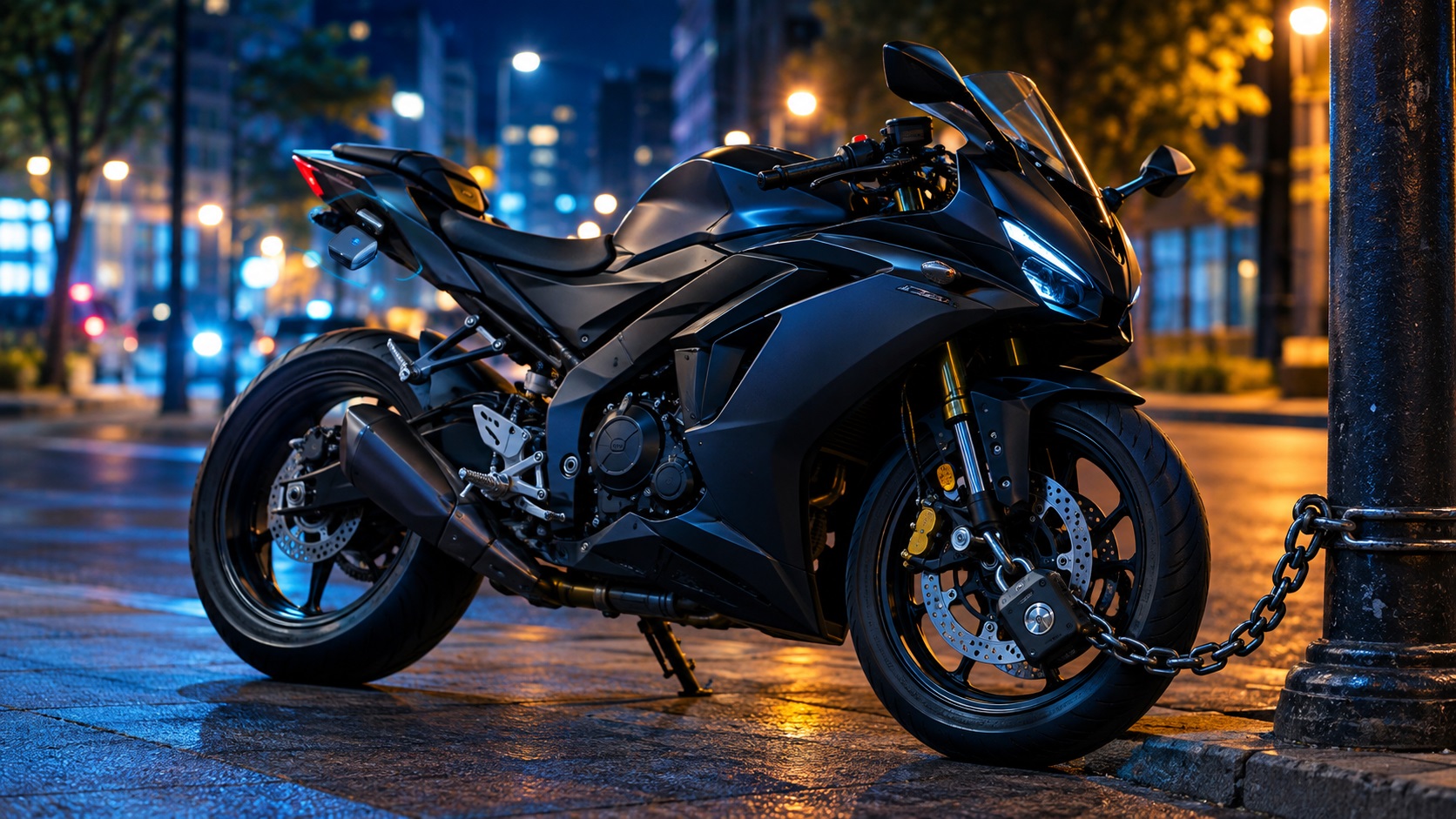
- A heavy chain securing the bike to an immovable ground anchor
- A cover, so the bike cannot be identified as worth stealing
- Parking in well-lit areas, which the NICB specifically recommends
- Steering locks engaged every single time, without exception
Think of it as a sequence: locks and anchors make a thief choose a different bike; the tracker is what you rely on if they choose yours anyway.
Insurance Implications
Many insurers offer premium discounts for approved, professionally fitted trackers — in some markets the discount is substantial enough to offset the subscription cost entirely. Requirements vary considerably between insurers and countries, so confirm which specific devices and installation standards yours accepts before buying. Our motorcycle insurance comparison for the USA and UK covers how cover works in those markets.
What to Do If Your Bike Is Stolen
- Call the police first. Report the theft and give them the live tracker location. Do not go to the location yourself — bike theft is often organised, and confronting thieves is genuinely dangerous.
- Notify your insurer immediately, with the crime reference number.
- Keep the tracking app open and share updated positions with police as the bike moves.
- Have your VIN and registration ready — recovery is far faster when you can prove ownership on the spot.
Stolen bikes are frequently stored in a nearby garage or lock-up for a few days to see whether they are being tracked before being moved on or broken for parts. Those first hours are when a tracker earns its cost.
Frequently Asked Questions
Can thieves block a GPS tracker?
Signal jammers exist and are used by organised theft crews, though they are illegal to operate in most countries. A tracker that logs its position internally while jammed and uploads once clear of the jammer offers useful protection against this.
Will a tracker drain my motorcycle battery?
A properly installed hardwired tracker draws very little current and includes sleep modes. If you leave your bike parked for weeks at a time, pair it with a trickle charger.
Do I need a subscription?
Almost always, yes — the tracker needs mobile data to report its position. Be sceptical of any device advertised as having no ongoing costs, and check what happens when the included data period ends.
Is one tracker enough?
For most riders, yes. For high-value bikes, two devices — one visible and one genuinely hidden — is a meaningfully stronger setup.
Once your bike is protected, keeping it running well is the other half of ownership — see our motorcycle maintenance checklist and safety gear guide.
Theft statistics cited are from NICB annual vehicle theft reporting and reflect US data. Figures, network availability, and insurance requirements vary by country — confirm current details for your own market before buying.