 YAMAHA
 SUZUKI
 HONDA
HONDA


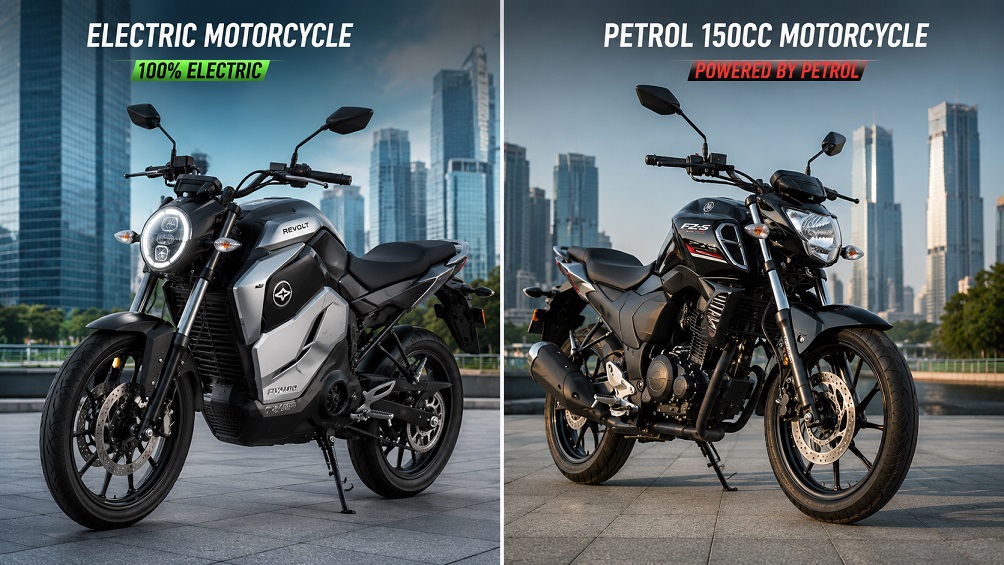
Electric Motorcycle vs Petrol 150cc Motorcycle: Which One Should You Buy in 2026?
An honest, cost-focused comparison for riders deciding between the two before their next purchase.
Every year, the "electric vs petrol" debate gets a little more relevant — and a little more confusing. Battery technology keeps improving, charging infrastructure keeps expanding, and yet petrol 150cc motorcycles remain the default choice for most daily commuters worldwide. So which one actually makes sense for you in 2026?
This guide skips the hype on both sides and focuses on what matters most: real running costs, practicality, and long-term value for daily riders.
The Core Difference: How Each Bike Actually Costs You Money
The upfront price tag is only the beginning of the story. Here's a simplified breakdown of where your money actually goes with each option:
| Cost Factor | Electric Motorcycle | Petrol 150cc Motorcycle |
|---|---|---|
| Upfront Price | Typically higher | Typically lower |
| Running Cost per KM | Significantly lower | Higher, tied to fuel prices |
| Maintenance | Lower (fewer moving parts) | Moderate (regular servicing needed) |
| Battery/Engine Lifespan Cost | Battery replacement can be costly | Engine rebuilds are rare if maintained |
| Resale Value | Still uncertain in most markets | Well-established resale market |
Where Electric Motorcycles Win
Electric motorcycles aren't just a trend — in the right conditions, they offer genuine advantages over petrol bikes.
1. Lower Cost Per Kilometer
Charging a battery costs a fraction of what filling a fuel tank does, especially in countries with high fuel prices or subsidized electricity rates. Over years of daily commuting, this adds up to meaningful savings.
2. Fewer Mechanical Parts, Less to Break
No clutch, no gearbox (in most models), no oil changes. Electric motors have far fewer components that wear out, which can mean less time and money spent on servicing.
3. Instant Torque and Smooth Riding
Electric motors deliver power instantly, without the need to shift gears or build RPM. For stop-and-go city traffic, this makes for a noticeably smoother, less fatiguing ride.
4. Quiet Operation
For riders in noise-sensitive residential areas, the near-silent operation of electric motorcycles is a genuine quality-of-life improvement.
Where Petrol 150cc Motorcycles Still Win
Despite the advantages above, petrol bikes remain dominant for very practical reasons.
1. Refueling Speed and Availability
Filling a petrol tank takes minutes, and fuel stations are everywhere. Charging an electric motorcycle — especially without home charging access — can take hours and requires reliable charging infrastructure that many regions still lack.
2. Range Confidence
Most petrol 150cc bikes comfortably cover 200–300km on a single tank. Many electric motorcycles are still limited to 80–150km per charge, which matters if your commute involves longer distances or unpredictable detours.
3. Established Service Networks
Petrol bike mechanics and spare parts are available in almost every town. Electric motorcycle servicing is still catching up in many countries, meaning repairs can take longer and cost more if something goes wrong.
4. Predictable Resale Value
Because petrol bikes have decades of established resale markets, buyers and sellers both have a clear sense of fair value. Electric motorcycle resale value is still developing and can be less predictable.
Which One Should You Actually Buy?
There's no universal right answer — it depends entirely on your riding pattern and local infrastructure. Use this quick decision guide:
- Choose electric if: You have home or workplace charging access, your commute is short-to-moderate, and you want the lowest possible running costs.
- Choose petrol if: You need long range flexibility, live in an area with limited charging infrastructure, or want the reassurance of an established service network.
- Consider both if: You're buying a second bike specifically for short city errands, while keeping a petrol bike for longer trips.
Final Thoughts
The electric vs petrol decision in 2026 isn't about which technology is "better" in the abstract — it's about which one fits your actual riding habits, budget, and local infrastructure. Petrol 150cc motorcycles remain the safer, more flexible choice for most riders today, while electric motorcycles are an increasingly smart option for short, predictable commutes with reliable charging access.
Whichever direction you choose, calculate your real running costs over 3–5 years before deciding — not just the price tag on day one.